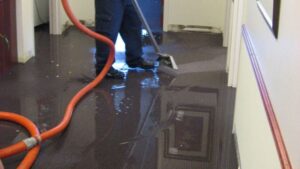
The washer overflows in a lower-level laundry room, or groundwater seeps in along the foundation after a wet stretch of weather, and by the time anyone notices, the carpet is soaked and boxes stored against the wall are ruined. Basements and lower-level spaces tend to be the last part of a home anyone checks, which is exactly why water damage there often goes unnoticed longer than it would anywhere else in the house.
Below-grade spaces in Seaside sit closer to groundwater and foundation moisture than the rest of the home, and once water gets in, it has nowhere to drain on its own. This article covers why basements are especially vulnerable to water damage, the signs to watch for, what to do right after discovering water in a lower-level space, and how our team approaches basement water damage restoration from extraction through rebuild.
Why Basements Are More Vulnerable to Water Damage
A basement sits below the surrounding grade, which means it is naturally positioned to collect water that would otherwise run off above ground. Foundation cracks, poor exterior drainage, and plumbing that runs through the lower level all give water a way in.
Once water enters a basement, it tends to sit rather than drain away, since gravity is working against it. That standing water gets absorbed into flooring, drywall, and any stored belongings, and because basements often have limited airflow, the area stays damp long after the initial water event, which sets the stage for mold growth.
Common Causes of Basement Water Damage
A basement can take on water from a number of different sources, and identifying the cause matters just as much as cleaning up the damage.
- Foundation cracks that let groundwater seep in during wet weather
- Poor exterior drainage or grading that directs rainwater toward the foundation instead of away from it
- Sump pump failure during a heavy storm
- Plumbing leaks or supply line failures from washers, water heaters, or utility sinks often located in basements
- Window well leaks in basements with below-grade windows
Warning Signs of Water Damage in a Basement
Because basements are used less often than the rest of the home, water damage can sit unnoticed for a while. A few signs are worth checking for regularly.
- A musty or earthy smell that does not go away with normal cleaning
- Visible water stains or discoloration on walls or the base of support posts
- Efflorescence, a white chalky residue on concrete walls or floors, which indicates moisture has been moving through the concrete
- Warped baseboards, buckling flooring, or a soft spot underfoot
- Peeling paint on basement walls
What to Do When You Discover Water in Your Basement
The first steps after finding water in a basement affect how much of the space can be saved.
- Shut off the water source if the flooding is coming from a pipe, appliance, or water heater.
- Move stored belongings, furniture, and boxes away from standing water as soon as it is safe to do so.
- Avoid entering the basement if there is any risk of electrical hazards from outlets, wiring, or appliances near the water.
- Take photos of the damage for insurance documentation before cleanup begins.
- Contact a water damage restoration team to begin extraction and drying.
Our Basement Water Damage Restoration Process
Basement restoration follows the same two-stage approach we use for any water damage job, adapted for the specific challenges of a below-grade space.
1. Extraction and Drying
We start by removing standing water and extracting moisture from flooring, drywall, and any belongings that can still be saved. Basements often need more thorough drying than above-grade spaces because of limited airflow, so we use equipment suited to pulling moisture out of concrete and framing, not just the surface.
2. Cleaning and Salvage
Items and materials that can be saved are sanitized and cleaned, while anything too damaged to restore, such as saturated carpet padding or waterlogged drywall, is removed and disposed of properly.
3. Structural Restoration
Once the space is fully dry, we rebuild what needs to be rebuilt, which can include replacing damaged drywall and flooring, repairing any mold growth that started before the space was dried, and addressing structural issues connected to the water intrusion. We test humidity and moisture levels before considering a basement job complete, since finishing work over damp concrete or framing is how problems come back.
Preventing Future Basement Water Damage
Restoring a basement after water damage is one part of the picture. Reducing the chance of it happening again usually comes down to addressing whatever let the water in the first place, whether that is a foundation crack, a drainage issue around the exterior of the home, or an aging sump pump. Homeowners in Seaside dealing with recurring basement moisture, even without a full flood, should have the source investigated before it turns into a larger repair.
Frequently Asked Questions
How Long Does Basement Water Damage Restoration Take?
It depends on how much water intruded and how long it sat before being addressed. A minor water event with quick response may take a few days to dry, while a larger flood involving reconstruction can take longer.
Can Mold Develop in a Basement Even Without Visible Flooding?
Yes. Basements can develop mold from ongoing dampness, condensation, or minor leaks that never produce standing water but keep the space humid enough for mold to grow over time.
Is It Safe to Clean Up Basement Water Damage Myself?
Small, contained spills may be manageable on their own, but any significant water intrusion, especially involving electrical systems or unknown contamination, is safer left to a professional team with the right extraction equipment.
What Causes That White Chalky Residue on My Basement Walls?
That is efflorescence, a mineral deposit left behind as moisture moves through concrete and evaporates. It is a sign that water has been passing through the wall and is worth having assessed even if there is no active leak.
Should I Replace Basement Flooring After Water Damage or Can It Be Dried?
It depends on the material and how long it was wet. Some flooring can be dried and salvaged if addressed quickly, while porous materials like carpet padding usually need to be replaced after significant water exposure.
Final Takeaways on Basement Water Damage Restoration in Seaside, CA
A damp basement rarely fixes itself, and the longer standing water or lingering moisture sits, the more it costs to put right. Whether the source is a foundation crack, a failed sump pump, or a plumbing leak, addressing both the water and its cause is what keeps the problem from coming back. Our team at Division Painting Inc. works with Seaside homeowners to extract water, dry the space thoroughly, and rebuild what was damaged, so a basement issue gets resolved rather than just cleaned up on the surface.