Wallpaper that felt fresh a decade or two ago can quickly start to look dated, and peeling edges or faded patterns only make it more obvious. Pulling it down yourself often means torn drywall, stubborn glue residue, and a wall that is not ready for paint when you are done.
Removing wallpaper correctly takes patience and the right technique for the adhesive underneath. Rush it and you risk gouging the drywall or leaving behind backing paper that shows through fresh paint.
This guide walks through how wallpaper removal works, what condition to expect the wall to be in afterward, and how repainting finishes the job for homes across Seaside and the surrounding Monterey Peninsula.
Why Homeowners Remove Wallpaper
Styles change, and a pattern that worked for a previous owner or an earlier decade rarely matches how a room is used today. Beyond style, wallpaper in older homes can start lifting at the seams, bubbling from moisture, or yellowing with age.
Bathrooms and kitchens near the coast are particularly prone to this. The humidity that rolls in with Seaside’s marine layer works its way into seams and edges over time, which weakens the adhesive and causes curling or bubbling well before the paper itself looks worn out elsewhere in the room.
Why Some Wallpaper Is Harder to Remove Than Others
Not all wallpaper comes down the same way, and the type installed makes a real difference in how long removal takes.
- Strippable wallpaper is the easiest, designed to peel away from the wall in large sections with minimal residue.
- Traditional pasted wallpaper tends to leave more backing paper and adhesive behind, which takes extra scraping and washing.
- Vinyl-coated wallpaper often needs scoring first so moisture can reach the adhesive layer underneath the coating.
- Wallpaper applied directly over bare drywall, without a primer coat first, is usually the most difficult, since the paper bonds tightly to the paper layer of the drywall itself.
We identify the type of wallpaper and adhesive during our initial assessment, which is part of why we can give homeowners a realistic estimate rather than a generic one.
What Removing Wallpaper the Right Way Involves
Wallpaper removal is one of those jobs that looks simple until the wall underneath tells a different story. Different adhesives, paper types, and wall surfaces all call for a slightly different approach.
1. We test a small section to understand the type of paper and adhesive involved before starting on the whole wall.
2. We score or perforate the paper where needed so moisture or stripping solution can reach the adhesive underneath.
3. We apply a steamer or solution to loosen the glue, then carefully peel the paper away in sections.
4. We scrape off any remaining backing paper or adhesive residue without gouging the drywall underneath.
5. We wash the wall to remove leftover glue film, since paint applied over residue often bubbles or fails to adhere properly.
Rushing this process is the most common reason wallpaper removal goes wrong. Skipped steps show up later as peeling paint or visible texture once the new coat goes on.
What Condition Is the Wall Left in After Removal?
Walls almost never come out from under wallpaper in perfect shape. Years of adhesive, multiple layers of paper, or even damage from a previous removal attempt are common.
- Minor scuffs and glue residue are typical and get cleaned up as part of the process.
- Small gouges or torn drywall paper, often from an impatient removal attempt years earlier, need patching before priming.
- Seams or texture differences between drywall and old plaster walls sometimes show through and need smoothing.
- Walls with heavy damage may need a skim coat to create an even surface before paint goes on.
We assess wall condition honestly before quoting the job, since a wall with significant prior damage takes more time to prepare than one that is simply ready for a fresh coat.
Priming and Repainting After Wallpaper Removal
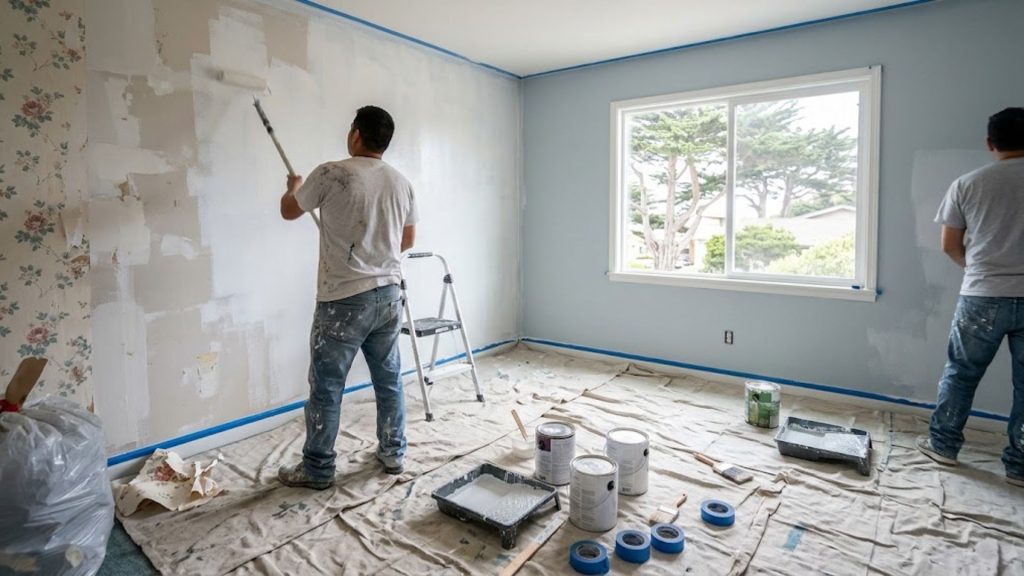
Skipping primer after wallpaper removal is one of the most common shortcuts that leads to problems down the line. Leftover adhesive, even in small amounts, can bleed through paint or cause uneven sheen without a proper primer coat sealing the wall first.
Once the wall is clean, patched, and primed, we repaint using a finish suited to the room. Bathrooms and kitchens generally call for a satin or semi-gloss finish that holds up to moisture, while bedrooms and living areas often work well with a flat or eggshell finish for a softer look.
How Long Does Wallpaper Removal and Repainting Take?
Timelines vary based on how many walls are involved, how many layers of wallpaper are present, and how much wall repair is needed afterward. A single wall in good condition might be ready for paint within a day, while a room with multiple layers of old wallpaper and drywall damage can take longer to prep properly before the first coat goes on.
We give homeowners a realistic estimate after seeing the wallpaper and wall condition in person, rather than assuming every removal job is the same.
Should You Repaper or Repaint?
Some homeowners consider replacing old wallpaper with new wallpaper instead of paint. That is a reasonable option if you want a specific pattern or texture, and we offer wallpaper installation as well as removal.
That said, most homeowners choose to repaint after removal. Paint is easier to update again down the road, offers more flexibility with color changes over time, and tends to hold up well in the coastal humidity common throughout the Monterey Peninsula.
Getting a Room Ready Before We Arrive
A few simple steps on the homeowner’s side help wallpaper removal day go smoothly.
- Clear furniture and wall décor away from the walls being worked on
- Point out any areas where previous removal attempts were made, since those spots often need extra patching
- Let us know about any known leaks or moisture issues in the room ahead of time
- Decide on a paint color in advance if you already have one in mind, or ask for guidance once the wall is prepped
Larger furniture can typically stay in the room. We protect it and work around it as needed.
Frequently Asked Questions
How Much Does Wallpaper Removal Cost in Seaside, CA?
Cost depends on the size of the room, the type of adhesive, and how much wall repair is needed afterward. We provide a free estimate after seeing the wallpaper and wall condition.
Will Removing Wallpaper Damage My Walls?
Done carefully, removal should not damage drywall significantly. Some minor patching is common, especially if a previous removal attempt left gouges, but we address that as part of the prep before painting.
Can You Repaint the Same Day Wallpaper Is Removed?
Usually not. The wall needs to be cleaned of residue, patched if necessary, and primed before paint goes on, which typically means the painting happens on a separate day or later in the same visit once prep is complete.
Do You Remove Multiple Layers of Old Wallpaper?
Yes. Multiple layers take more time and a more careful approach, but we handle homes where wallpaper has been applied over wallpaper more than once.
Is Wallpaper Removal Worth It Compared to Painting Over It?
Painting directly over wallpaper rarely looks good and tends to show seams, texture, and peeling edges over time. Removing it first gives a cleaner, longer-lasting result.
Final Thoughts on Wallpaper Removal in Seaside, CA
Old wallpaper rarely improves with age, and in a coastal climate like Seaside’s, the humidity that works its way into seams only speeds up the peeling and bubbling. Removing it properly, patching the wall underneath, and priming before paint are the steps that determine whether the final result looks clean or shows problems within a year.
Division Painting Inc has handled wallpaper removal and repainting for homes across the Monterey Peninsula for 17 years, and we treat the prep work as seriously as the paint itself. If a room in your home is still wearing wallpaper from a previous decade, reach out for a free estimate and we will walk you through what the wall underneath will need.